Getting enough new patients can be a challenge for dental practices, especially when local competition is high. Recent research from the American Dental Association shows that one-third of dentists reported that their practices were not busy enough in Q4 2025. This highlights the need for effective ways to reach potential patients.
PPC for dentists helps practitioners reach people actively searching for a dentist, treatment, or urgent dental care. With the right keywords, local targeting, ad copy, landing pages, and tracking, paid search can turn high-intent searches into calls and appointment requests.
In this guide, we will cover how PPC for dentists works, which services to advertise, and what affects PPC costs. We will also cover key metrics, common campaign mistakes, and how to build a stronger paid search strategy for a U.S. dental practice.
What Is PPC for Dentists, and How Does Dental PPC Work?
PPC for Dentists is paid advertising that places dental practices in front of people searching for dental services. Google Ads is the main platform used for search-based campaigns.
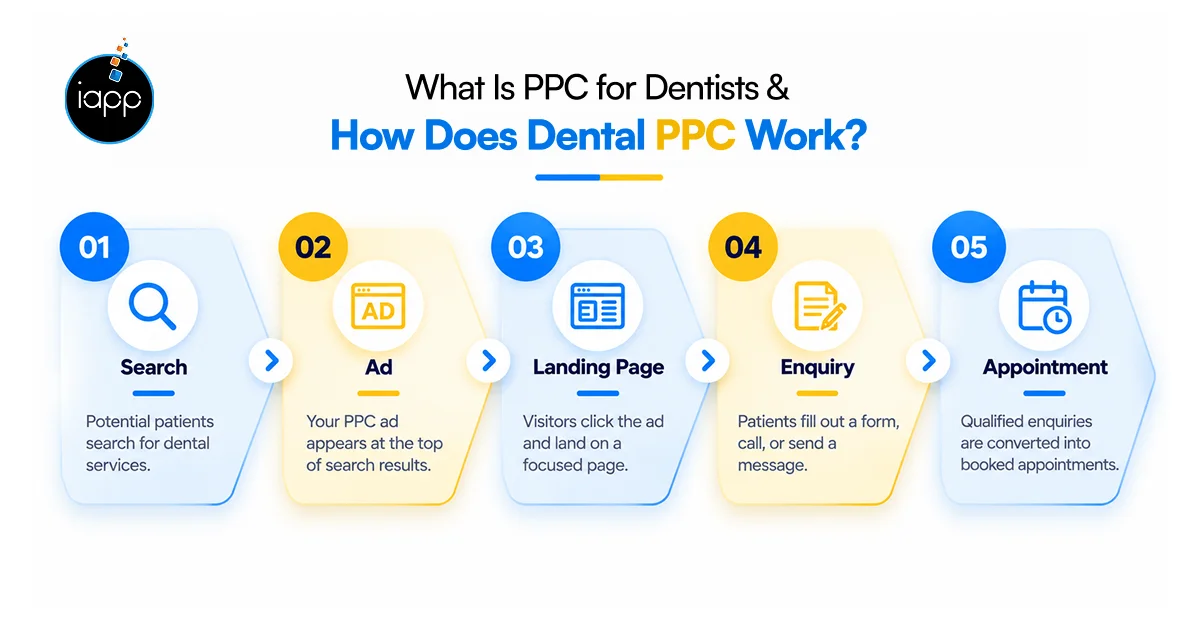
The basic process is simple:
Search → Ad → Landing Page → Enquiry → Appointment
A patient may search for “dentist near me” or “emergency dentist in Miami.” A relevant ad can appear near the top of the results. The patient then clicks the ad and reaches a relevant page. From there, they may call, submit a form, or book an appointment.
This is the core of dental PPC. However, clicks alone do not show whether a campaign is working. A practice needs to track what happens after the click. For example, 100 clicks can look positive. Yet, five qualified calls may be more useful than 100 low-intent visits. That is why Google Ads for dentists should be measured beyond clicks, with a focus on qualified enquiries and booked appointments.
Why Should Dental Practices Invest in PPC Advertising?
PPC advertising for dentists can help practices reach people who already have a specific dental need.
Paid search can provide visibility for searches such as:
- Dentist near me
- Emergency dentist near me
- Dental implants in Austin
- Cosmetic dentist in Los Angeles
- Invisalign dentist in Chicago
This makes PPC useful for dental patient acquisition, especially when a practice wants to reach people searching at present. Organic SEO can take time to build. PPC can provide paid visibility while the practice works on its long-term search presence.
Location targeting also gives practices control over where ads appear. Campaigns can focus on selected cities, ZIP codes, or service areas.
A practical example
Suppose a new dental practice opens in Phoenix.
Its website may not rank well immediately for competitive searches. A focused paid campaign can target searches for general dentistry, emergency care, or specific treatments. The practice can then send each searcher to a relevant page.
This approach makes PPC for dental practices useful during market entry, new service launches, or periods when appointment demand needs support.
Which Dental Services Can PPC Campaigns Promote?
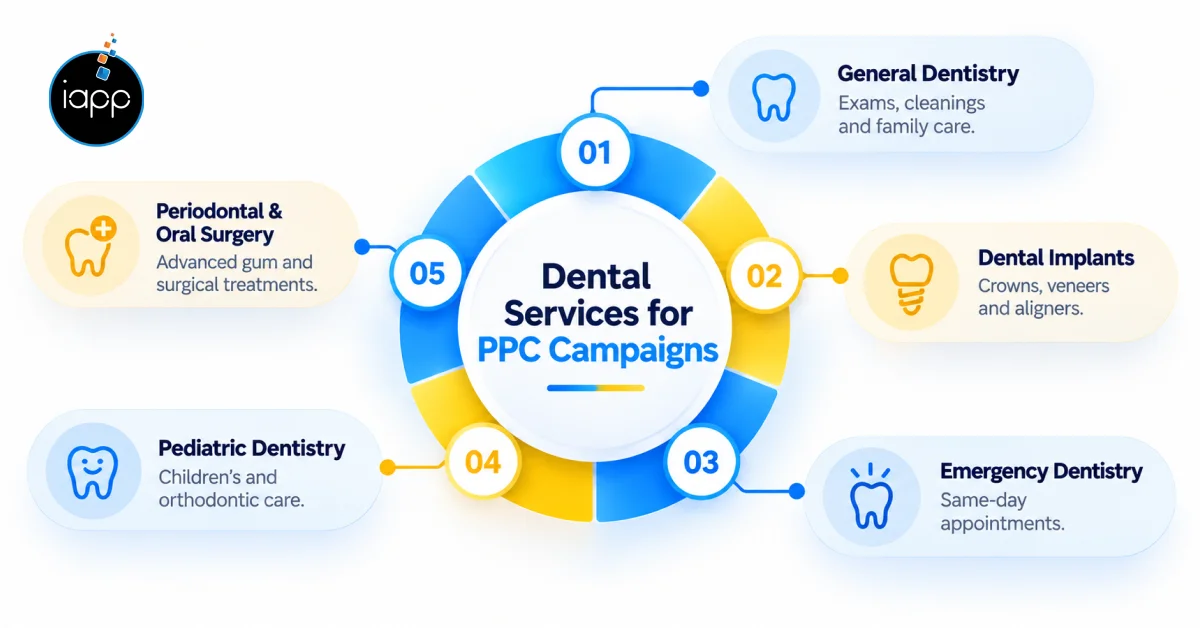
Google Ads for dental practices can promote several types of services. The campaign structure should reflect what people are actually searching for.
Common categories include:
- General dentistry, exams, cleanings, and family dentistry
- Dental implants, crowns, veneers, and aligners
- Emergency dentistry and same-day appointments
- Pediatric dentistry and orthodontic services
- Periodontal and oral surgery services
A broad “dentist” campaign may not fit every service. Someone searching for “emergency dentist near me” has a different need from someone researching cosmetic veneers. Treatment-specific campaigns allow the ad, keyword, and landing page to match that need. This can also make Dental Google Ads easier to measure by service.
How to Use PPC for Dentists: Key Campaign Elements
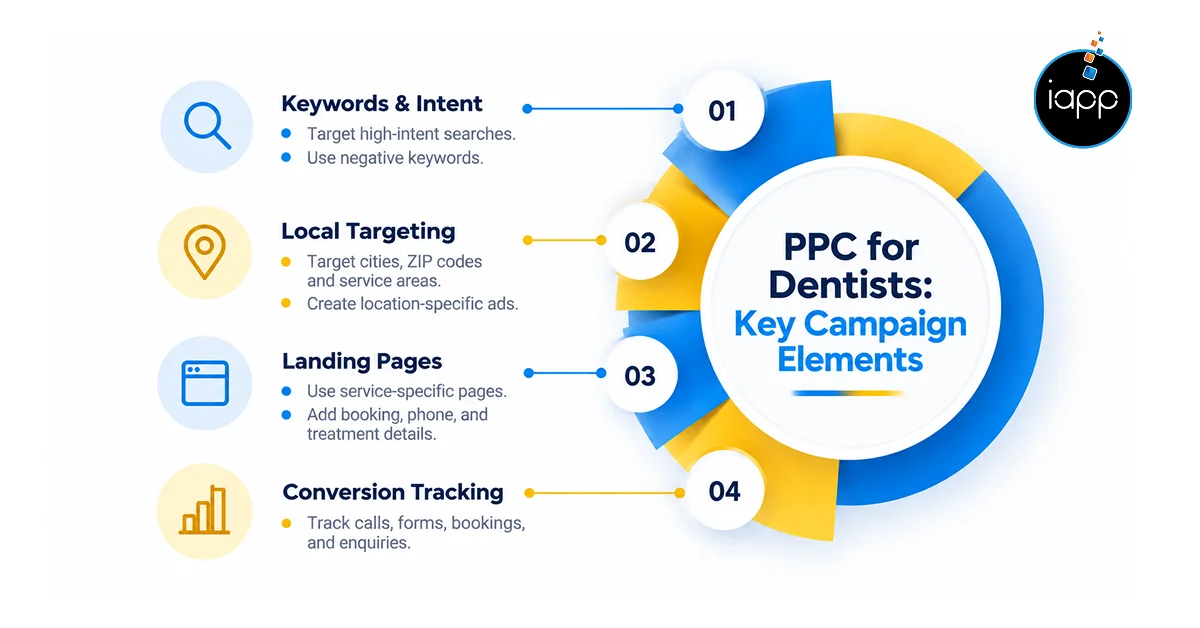
Keyword and Search-Intent Strategy
PPC for dentists starts with understanding search intent. Some search keywords show strong commercial intent. Others are mainly informational.
For example:
- “Dental implant cost” may indicate research.
- “Dental implant dentist near me” shows stronger local intent.
- “Book dental implant consultation” shows even clearer action intent.
A campaign should also use negative keywords. These prevent ads from showing for searches that are unlikely to produce relevant enquiries.
Local Targeting and Ad Structure
Local targeting is important for most dental practices.
Campaigns can focus on:
- Cities
- ZIP codes
- Service areas
- Selected geographic radii
- Individual practice locations
A multi-location dental group can also separate campaigns by location. The ad copy should then reflect the relevant service and area. This creates a clearer connection between the search and the practice.
Landing Pages and Conversion Paths
The ad is only the first step. A person clicking “Emergency Dentist in Dallas” should not necessarily land on a generic homepage. A dedicated landing page can focus on emergency appointments.
It can include:
- Phone and click-to-call options
- Appointment forms
- Practice location
- Opening hours
- Insurance information
- Treatment details
- Clear booking actions
Mobile performance matters too. Many local searches happen on phones, so the booking path should be quick and easy.
Conversion Tracking
PPC marketing for dentists should track actions that matter to the practice.
These can include:
- Phone calls
- Appointment forms
- Online bookings
- Qualified enquiries
- Booked appointments
Our key recommendation is simple: do not judge a dental campaign only by CTR or CPC.
A better view is:
Google Ad → Lead → Qualified Lead → Appointment → Acquisition Cost
A campaign with a higher CPC can still make business sense if it produces better-qualified patients. That is an important part of effective dental practice PPC management.
How Much Does PPC for Dentists Cost in the USA?
There is no fixed price for every U.S. dental practice. Costs change based on location, treatment, competition, campaign structure, and management requirements.
Estimated Dental PPC Costs in the USA
| Cost Factor | What It Influences | Estimated Range (US Market Rate) | Technical Reality & Strategy |
|---|---|---|---|
| Monthly Ad Budget | Potential clicks and leads | $1,500 – $5,000+ / mo | Determines your monthly impression share against competing local practices. |
| Cost Per Click (CPC) | Cost of each paid click | $3.50 – $12.00+ / click | Fluctuates heavily by keyword intent (e.g., "emergency dentist near me" vs "general dental checkup"). |
| Location / Geography | Local search competition | Low to High Competition | Major metro areas (e.g., New York, Los Angeles) face high ad bid inflation compared to suburban zones. |
| Treatment Type | Commercial value and search demand | High-Value vs Routine | High-ticket procedures like dental implants or Invisalign require larger budgets due to hyper-competitive bidding. |
| Management Fee | Professional campaign setup and optimization | 10% – 20% of ad spend (or $500–$1,500 flat monthly fee) | Covers conversion tracking configuration, negative keyword audits, and ongoing A/B ad testing by an agency. |
| Landing Page Development | Conversion potential | $500 – $2,500 (One-time) | Designing custom, fast-loading, mobile-first pages to maximize patient bookings from click traffic. |
| Lead Quality | Actual business value | $40 – $150+ per lead | Higher-quality, high-intent phone call leads usually carry a premium cost per acquisition (CPA). |
Ad Spend vs. Management Fees: Decoupling Your Dental PPC Budget
To maximize your return on ad spend (ROAS), your practice must treat ad spend and agency management fees as two entirely separate operational lines. Ad spend is your direct capital injection paid to Google Ads or Meta to secure click inventory. Conversely, management fees fund the continuous backend engineering. It includes keyword clustering, negative matching, dynamic ad copy testing, and conversion tracking audits.
Budget performance is inherently tied to local geography. For example, a $3,000 monthly budget for dental implants in Chicago may generate different results than the same budget for general hygiene leads in a suburb. So, PPC for dentists in the USA must always be built around your localized market competition and specific practice revenue goals.
What Metrics Should Dentists Track in a PPC Campaign?
The right reporting goes beyond clicks. Dentists should understand how paid traffic contributes to actual enquiries and appointments.
| Metric | What It Tracks | Target Benchmark for Dental Practices |
|---|---|---|
| Click-Through Rate (CTR) | Ad copy relevance and local search alignment. | 4.5% – 7.0% in Google Search Network. |
| Cost Per Click (CPC) | Ad auction bid value per local market click. | $3.50 – $12.00 (Implants vs general cleaning). |
| Conversion Rate (CVR) | Percentage of ad clicks that convert to leads. | 12% – 20% on an optimized landing page. |
| Cost Per Acquisition (CPA) | Marketing cost to secure one booked patient. | $40 – $150 based on treatment value. |
- A click is not the same as a lead.
- A lead is not always a qualified inquiry.
- A qualified enquiry is also not automatically a booked appointment.
- That distinction matters when reviewing paid advertising for Dentists.
What Are the Common Dental PPC Mistakes to Avoid?
Many PPC problems stem from structural flaws rather than the advertising platform itself. Avoid these major campaign errors by deploying immediate technical solutions:
- The Mistake: Using broad keywords without negative keywords.
- The Fix: Enforce phrase and exact match types while implementing a 300+ word negative keyword exclusion list.
- The Mistake: Sending every ad click to your homepage.
- The Fix: Deploy dedicated standalone landing pages containing dynamic call-tracking scripts to isolate conversions at keyword levels.
- The Mistake: Combining every treatment into one campaign.
- The Fix: Group your ad accounts cleanly by separating high-ticket implants from routine family hygiene budgets.
- The Mistake: Targeting an overly broad geographical area.
- The Fix: Restrict your active radius parameters to a strict 3-to-7-mile zone surrounding your physical practice.
- The Mistake: Measuring raw click volumes instead of booked patient appointments.
- The Fix: Configure deep pipeline tracking through Google Tag Manager to measure actual phone calls and scheduling requests.
- The Mistake: Ignoring missed calls and responding slowly to new inquiries.
- The Fix: Connect a direct CRM automated auto-responder loop to capture patient enquiries within 5 minutes.
What Should U.S. Dentists Know About Google Ads and Healthcare Advertising Policies?
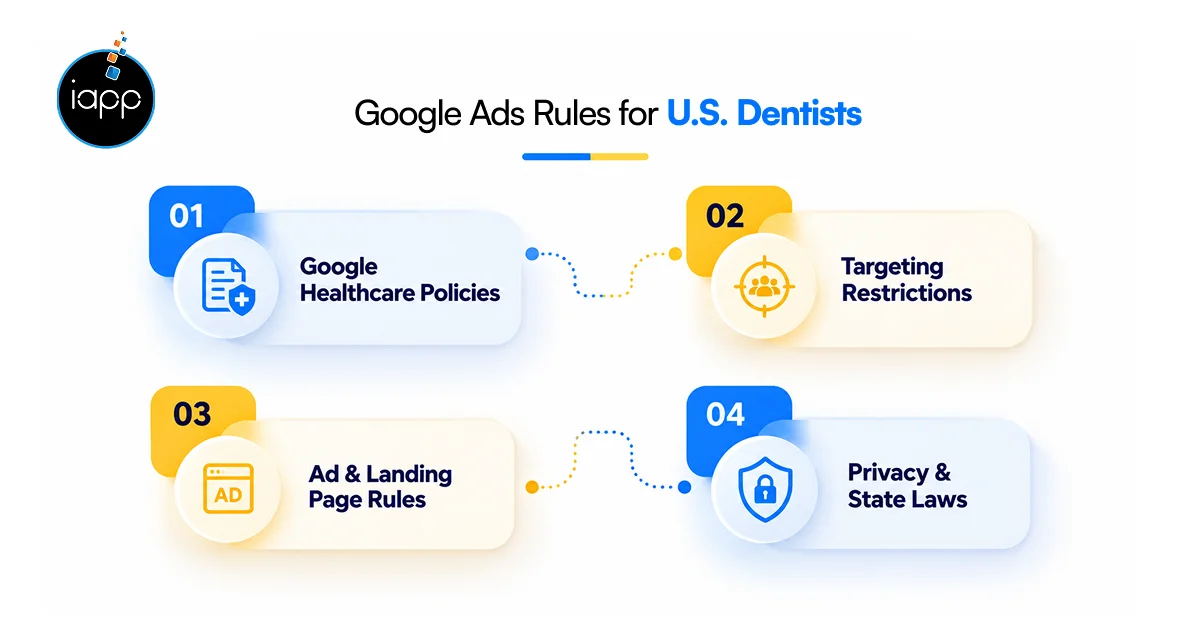
Dental advertising requires attention to platform policies and privacy rules. Google classifies health as a sensitive interest category for personalized advertising. Certain advertiser-curated audience features are therefore restricted.
Google also states that healthcare advertising must follow applicable laws and industry standards. Some healthcare categories require additional approval or certification.
For dental practices, campaign teams should therefore review:
- Google Ads healthcare policies
- Targeting restrictions
- Ad and landing-page content
- Patient information handling
- Applicable state advertising rules
- Privacy requirements
How iApp Technologies Can Help With PPC Services
At iApp Technologies, we focus on connecting paid campaigns with the actions that matter to a business. For dental practices, our approach can cover campaign planning, landing pages, tracking, testing, and ongoing optimization.
Build a Dental PPC Strategy Around Treatments and Locations
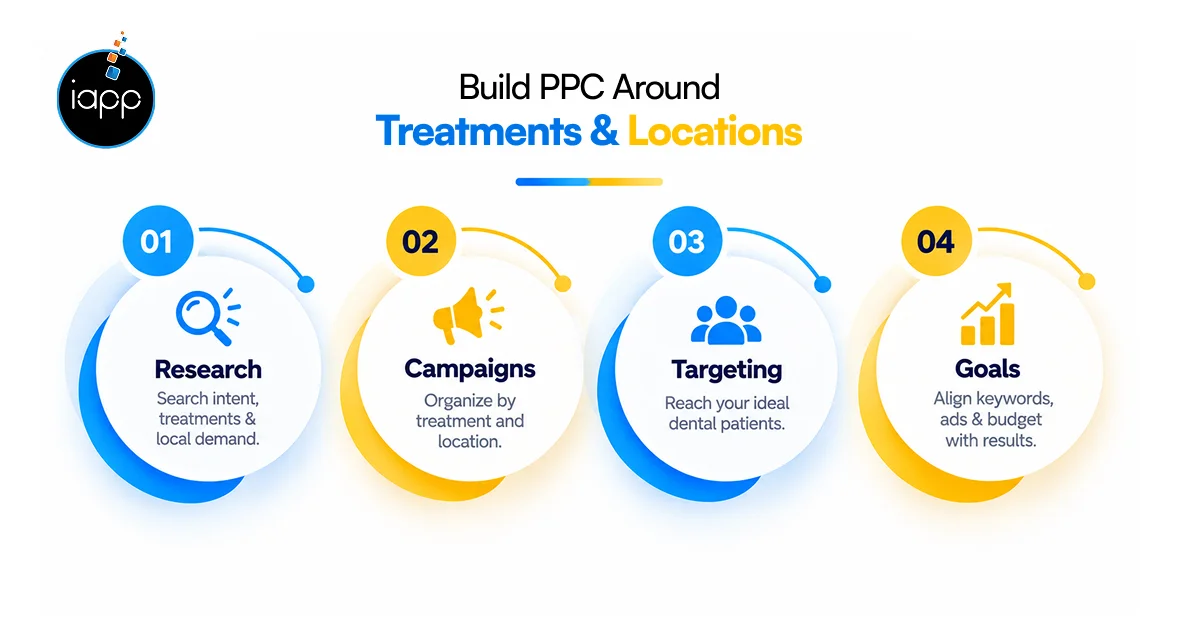
We build our PPC strategy around your dental services, target locations, and practice goals.
- Our ad experts research search intent, treatment categories, local demand, and competing search results.
- We structure campaigns around specific treatments and geographic priorities.
- Our team aligns PPC marketing for USA dentists with your practice goals and target patients.
- For example, if your goal is more implant consultations, we structure the campaign around that objective rather than general website traffic.
- Our keywords, ads, targeting, and budget are planned around the results your practice wants to achieve.
Connect Ads With Landing Pages and Lead Tracking
A paid campaign should not stop at getting someone to click an ad. We connect the ad, landing page, and conversion path so patients can quickly take the next step. Treatment-focused ads can lead to relevant pages, with clear options to call, submit a form, or request an appointment. Conversion tracking then shows which campaigns and keywords are generating actual enquiries. This gives our dentist PPC Services a clearer view of how paid traffic contributes to patient acquisition.
Monitor, Test, and Optimize Campaign Performance
PPC performance can change as search behavior, competition, and campaign data evolve. Our team reviews search terms, negative keywords, ad performance, landing pages, and conversion data to identify where improvements are needed. Campaign elements can be tested, while budgets and bids are adjusted based on the treatments and locations, producing stronger enquiries. With this ongoing approach, our Dental PPC Services stay focused on improving lead quality and turning paid search traffic into more valuable patient opportunities.
Key Takeaways
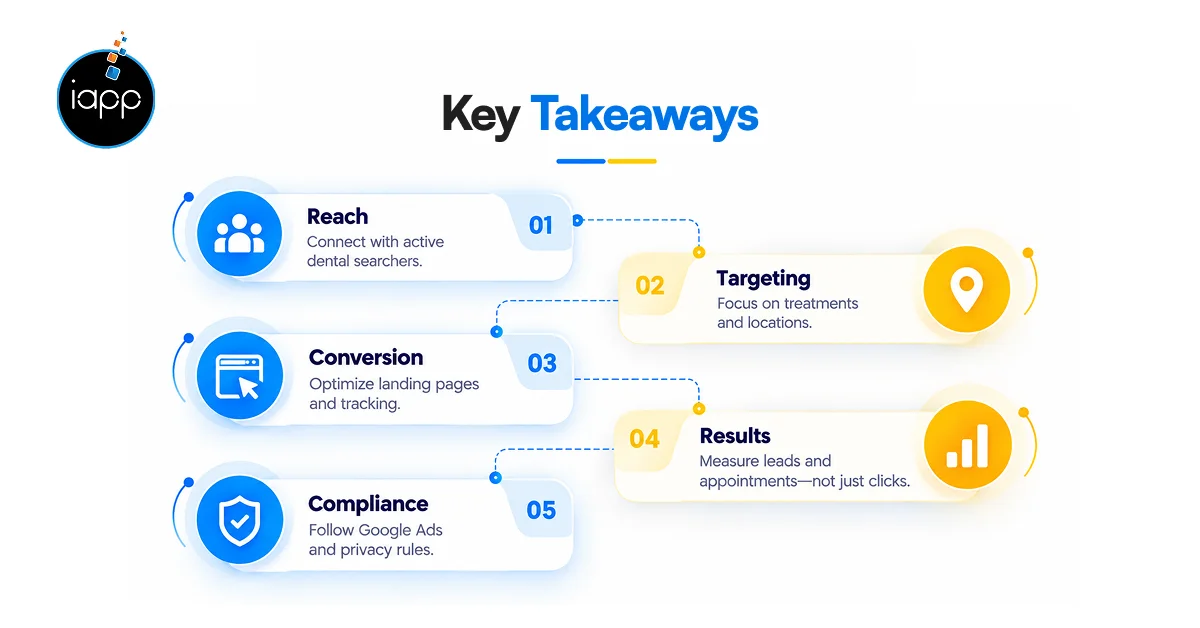
- PPC for dentists can reach people actively searching for dental services.
- Treatment and location targeting can make campaigns more relevant.
- Landing pages and tracking are as important as the ads.
- Dentists should measure qualified leads and appointments, not clicks alone.
- U.S. campaigns need attention to Google Ads policies and patient privacy.
- Professional Dental PPC Services can support campaign planning and optimization.
Conclusion
PPC for dentists works best when keywords, locations, ads, landing pages, and tracking support one clear goal. The focus should move from clicks to qualified enquiries and booked appointments.
At iApp Technologies, we can help dental practices plan and manage paid campaigns around services, locations, landing pages, and measurable conversions. If you want to assess your current paid search setup, we can review your campaign structure and identify practical opportunities.