A business owner may be concerned that Google is penalizing the website if it has a high spam score. Examine the backlink profile for trends, relevancy, and deceptive signals prior to deleting links.
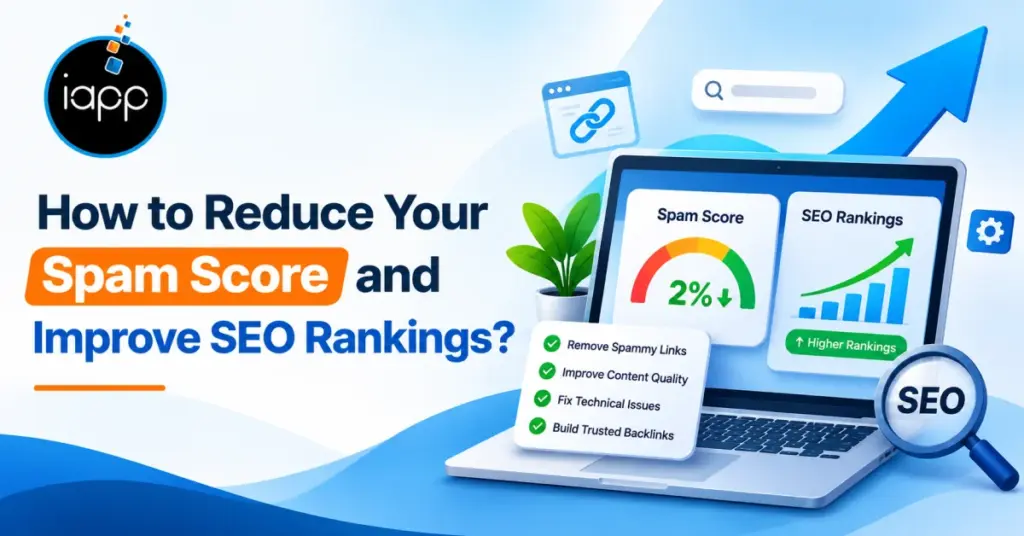
Building a more relevant backlink profile, eliminating connections that are actually damaging, and auditing questionable backlinks are the practical answer to how to reduce spam score.
Let us see doing the same without destroying helpful links.
What Is Spam Score in SEO?
Spam Score in SEO is a third-party metric that estimates how closely a website’s backlink or domain profile resembles patterns associated with potentially spammy websites. It is not a Google ranking score or a direct penalty percentage.
Google’s own guidance focuses on spam practices, including manipulative behavior and abuse intended to influence Search. Its current documentation also confirms that spam policies apply to generative AI responses in Google Search.
So, how to reduce spam score should not mean chasing a specific number. The goal is to create a cleaner, more relevant, and naturally earned backlink profile.
Why Does Your Spam Score Increase?
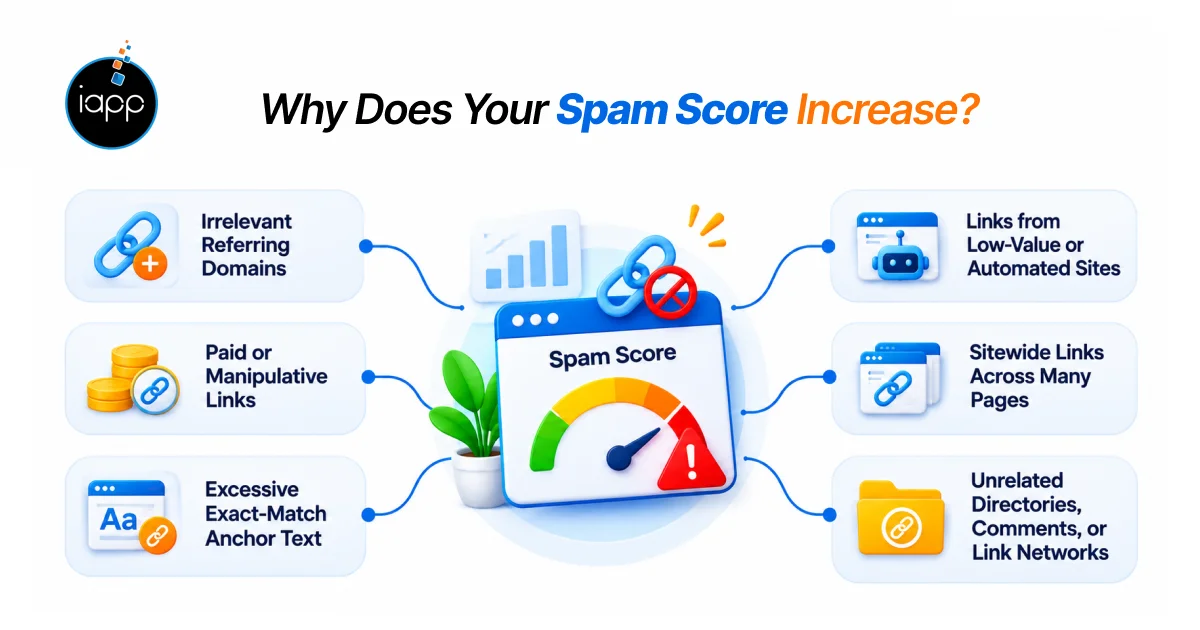
A spam score can rise when your backlink profile contains patterns that SEO tools consider risky.
Common causes include:
- Large numbers of irrelevant referring domains
- Paid or manipulative links
- Excessive exact-match anchor text
- Links from low-value or automated websites
- Sitewide links placed across hundreds of pages
- Unrelated directories, comment links, or link networks
For example, a U.S. software company targeting “CRM software” may have hundreds of links from unrelated gambling, coupon, or foreign-language websites. Those links deserve investigation because their relevance is difficult to justify.
Google specifically warns against link practices intended primarily to manipulate rankings.
How Do You Check and Audit a Website’s Spam Score?
Start with a spam score checker, but do not treat its result as the final decision.
| Tool | Primary Check | Practical Use |
|---|---|---|
| Moz | Spam Score | Identify potential risk patterns |
| Ahrefs | Referring domains and backlinks | Analyze link quality and context |
| Semrush | Toxicity signals | Prioritize suspicious links |
| Google Search Console | Links and manual actions | Check Google's own data |
A practical backlink audit should examine:
- Referring domain relevance
- Anchor-text distribution
- Follow/nofollow attributes
- Link placement
- Domain quality and indexing
- Sudden backlink spikes
- Repeated links from the same network
Do not delete a link simply because its domain has a low authority score.
How Can a Backlink Audit Help Reduce Spam Score?

A structured audit makes it easier to reduce spam score without removing valuable backlinks.
Use four categories:
- Keep: Relevant, natural, useful links
- Investigate: Suspicious but not clearly harmful links
- Remove: Clearly manipulative or unwanted links
- Disavow: Links requiring Google’s disavow process in appropriate circumstances
Our expert view is simple: context matters more than a single metric. A relevant link from a smaller industry website can be more useful than a high-metric website with no connection to your business.
This is also why how to improve spam score should be approached as a backlink-quality project, not a score-chasing exercise.
How Do You Remove Spammy Backlinks Safely?
The safest approach is to investigate first and remove only links that create a genuine concern.
Identify Links That Need Action

Prioritize links showing:
- Manipulative anchor text
- Obvious paid placement
- Link-network patterns
- Irrelevant sitewide placements
- Automated or low-value pages
Request Link Removal
Contact the website owner when the link is clearly unwanted or was deliberately created.
Maintain a simple spreadsheet with:
| Status | Recommended Timeline |
|---|---|
| Link discovery | Day 1–3 |
| Risk classification | Day 3–7 |
| Removal requests | Week 2 |
| Follow-up | Week 3–4 |
| Recheck profile | 30–60 days |
Use Disavow Carefully
Do not disavow every link an SEO platform calls “toxic.” Google provides Search Console specifically for monitoring issues and recommends investigating spam signals rather than relying on one automated score.
How Can You Improve SEO Rankings After Cleaning Your Backlink Profile?

Cleaning a backlink profile is only one part of SEO. To reduce spam score and improve organic performance, replace risky acquisition tactics with relevant authority-building.
Focus on:
- Industry-specific digital PR
- Original research and statistics
- Expert-led content
- Relevant partner websites
- Useful resources that naturally earn citations
- Branded and natural anchor text
For a U.S. B2B company, a practical 90-day plan could look like:
Month 1: Audit and classify backlinks
Month 2: Remove clear risks and publish authority content
Month 3: Conduct relevant outreach and monitor rankings
Track organic clicks, impressions, keyword positions, referring domains, and qualified leads. A lower third-party score without better business results is not enough.
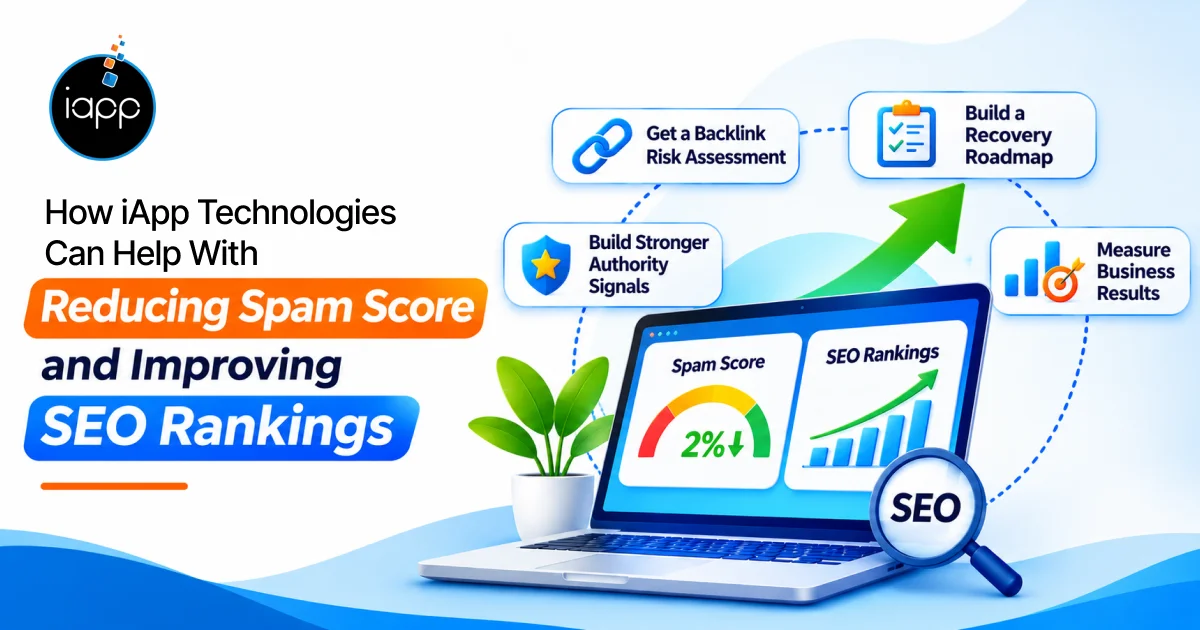
How iApp Technologies Can Help With Reducing Spam Score and Improving SEO Rankings
At iApp Technologies, we focus on the underlying SEO problem rather than promising a quick score reduction. Our approach combines backlink analysis with broader organic-growth goals.
Get a Backlink Risk Assessment
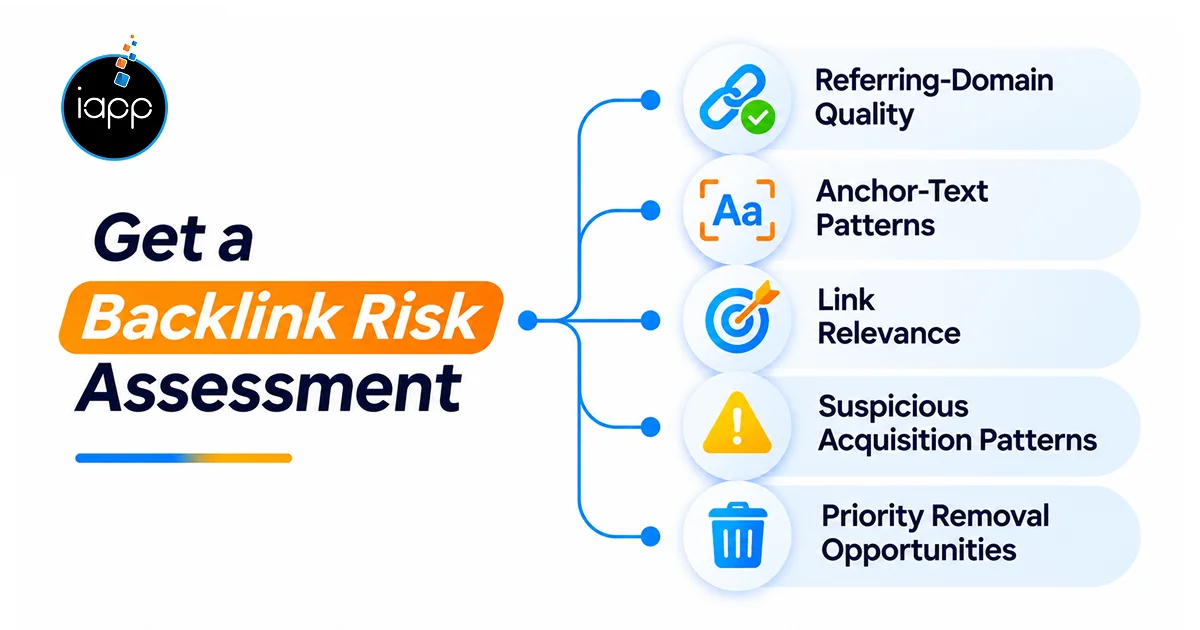
We can review your backlink profile and identify patterns that deserve attention.
Our assessment can cover:
- Referring-domain quality
- Anchor-text patterns
- Link relevance
- Suspicious acquisition patterns
- Priority removal opportunities
Build a Recovery Roadmap
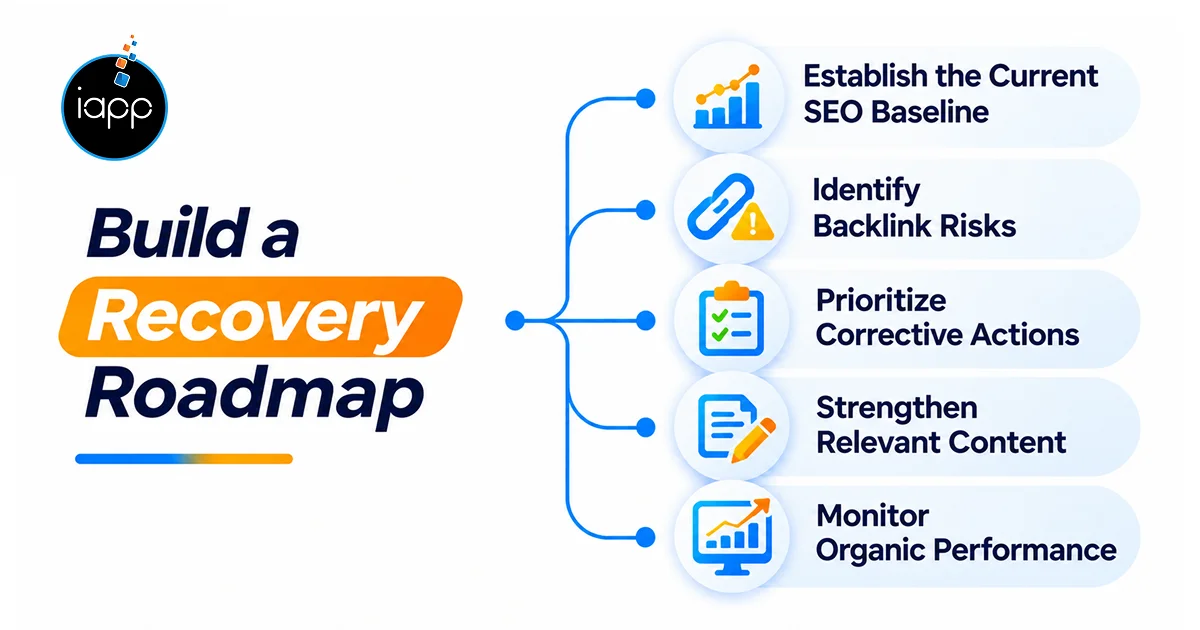
We organize the work into measurable stages:
- Establish the current SEO baseline
- Identify backlink risks
- Prioritize corrective actions
- Strengthen relevant content
- Monitor organic performance
This gives businesses a practical route for how to reduce spam score without making unnecessary changes.
Build Stronger Authority Signals
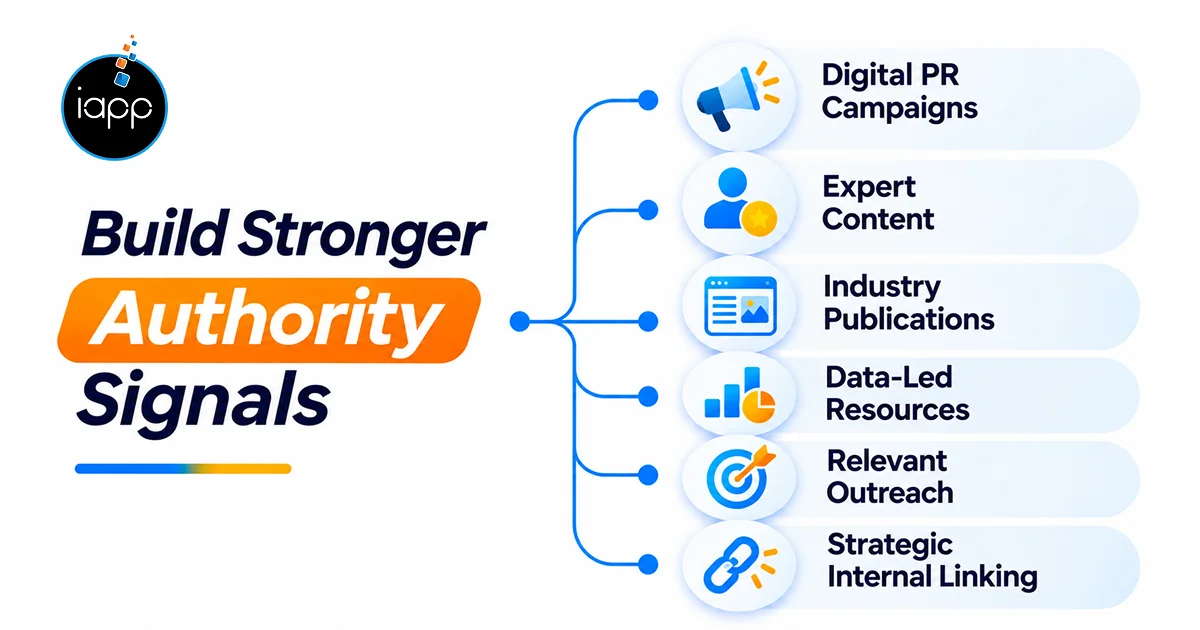
Instead of replacing one risky link with another, we focus on sustainable authority.
This can include:
- Digital PR campaigns
- Expert content
- Industry publications
- Data-led resources
- Relevant outreach
- Strategic internal linking
Measure Business Results
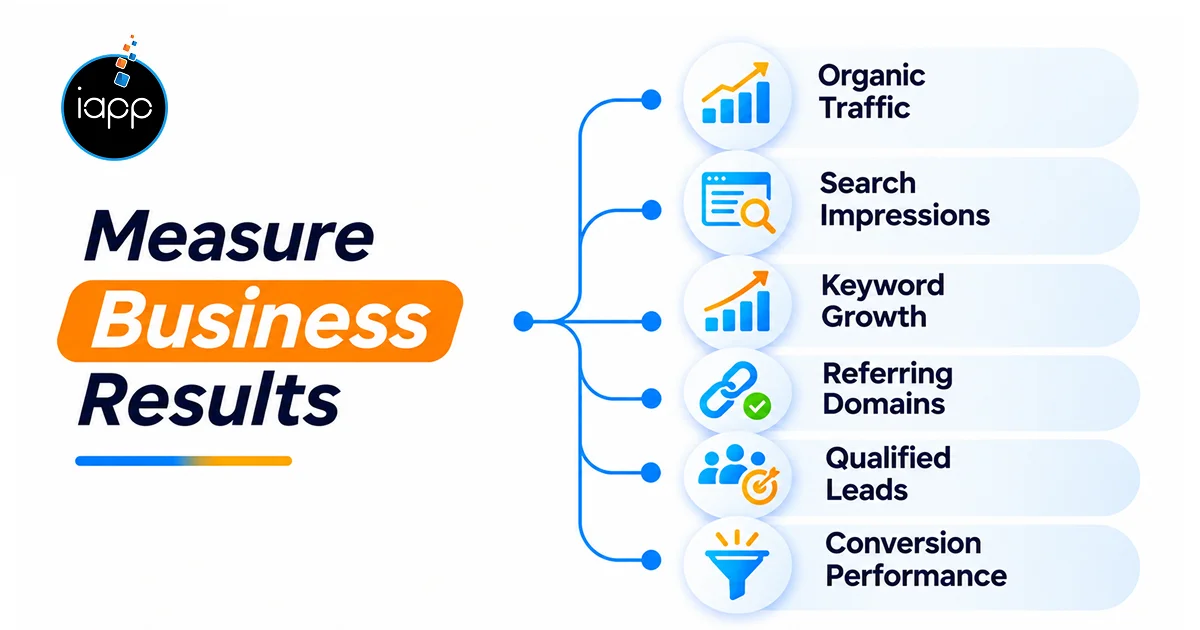
We measure more than the number shown by a spam score checker.
Our reporting can track:
- Organic traffic
- Search impressions
- Keyword growth
- Referring domains
- Qualified leads
- Conversion performance
For businesses comparing an SEO agency USA, this broader measurement approach helps connect technical SEO work with actual business outcomes.
Key Takeaways
- How to reduce spam score starts with understanding the backlink profile.
- A third-party spam score is not the same as a Google penalty.
- Use a backlink audit before removing or disavowing links.
- Investigate toxic backlinks based on relevance and manipulation signals.
- Build relevant editorial links instead of chasing backlink volume.
- Measure rankings, traffic, leads, and conversions alongside backlink health.
Conclusion
Learning how to reduce spam score is less about reaching a perfect number and more about maintaining a natural, relevant backlink profile. Audit questionable links carefully, remove genuine risks, and support the cleanup with sustainable SEO and authority-building.
iApp Technologies helps businesses evaluate backlink risks and build SEO strategies around measurable organic growth. If your website has a rising spam score or unexplained ranking changes, start with a structured review rather than removing links blindly.
FAQs
What is a good spam score for a website?
There is no universal Google-approved spam score threshold. Treat the metric as a diagnostic signal and investigate the backlink patterns behind it.
Does spam score affect Google rankings?
No direct Google ranking score called “spam score” exists. Google evaluates spam and ranking signals through its own systems.
How often should I check my website’s spam score?
Check monthly for actively managed websites and after major link-building campaigns, ranking drops, or unexpected backlink spikes.
Can new websites have a high spam score?
Yes. A new domain can receive a high third-party score because of its backlink sources, domain characteristics, or patterns detected by the scoring system.
Are backlinks from low-authority websites always harmful?
No. A low-authority website can still provide a legitimate, relevant link. Relevance, context, intent, and acquisition method should be considered together.
Should I disavow every toxic backlink?
No. Do not automatically disavow every link labeled toxic by an SEO platform. Investigate the link and determine whether action is actually justified.
Can removing backlinks hurt SEO?
Yes. Removing legitimate, relevant backlinks can reduce useful authority or referral traffic. Always evaluate a link before requesting removal.
How long does it take to improve a website’s backlink profile?
A basic cleanup can take 30–60 days, while meaningful authority improvement usually requires several months of consistent content, outreach, and monitoring.